

In recent years, significant progress has been made in the research of oligonucleotide and lipophilic molecule conjugates, focusing on improving the delivery efficiency, bioavailability, and therapeutic effects of oligonucleotides. The following is a detailed discussion from three aspects: research background, research progress, and future directions.
1. Research Background
Oligonucleotides (such as antisense oligonucleotides, small interfering RNA, aptamers, etc.) have shown great potential in gene therapy and disease treatment due to their ability to target pathogenic RNA or proteins and inhibit their activity. However, oligonucleotides have limitations such as poor active targeting, low stability in vivo, and weak transmembrane ability, which restrict their clinical application. Therefore, researchers have been coupling oligonucleotides with functional molecules to improve their delivery efficiency and therapeutic effects.
2. Research Progress
2.1. Lipid-Conjugated Oligonucleotides
Lipid-conjugated oligonucleotides are conjugates of oligonucleotides and lipid molecules. By introducing hydrophobic groups (such as cholesterol, vitamin E, fatty acids, etc.), the cellular uptake ability of oligonucleotides is enhanced. For example, lipid-conjugated oligonucleotides (LONs) can enter cells through lipid carriers and release oligonucleotides intracellularly, thereby improving their bioavailability and therapeutic effects.
Research shows that lipid conjugates not only enhance the cellular uptake rate of oligonucleotides but also achieve efficient delivery in the form of nanoparticles. For instance, lipid-oligonucleotide conjugates (LONs) have been used in the treatment of various diseases, including cancer, neurodegenerative diseases, and genetic disorders. Additionally, lipid conjugates exhibit good biocompatibility and low toxicity during the delivery process.
2.2. Peptide-Conjugated Oligonucleotides
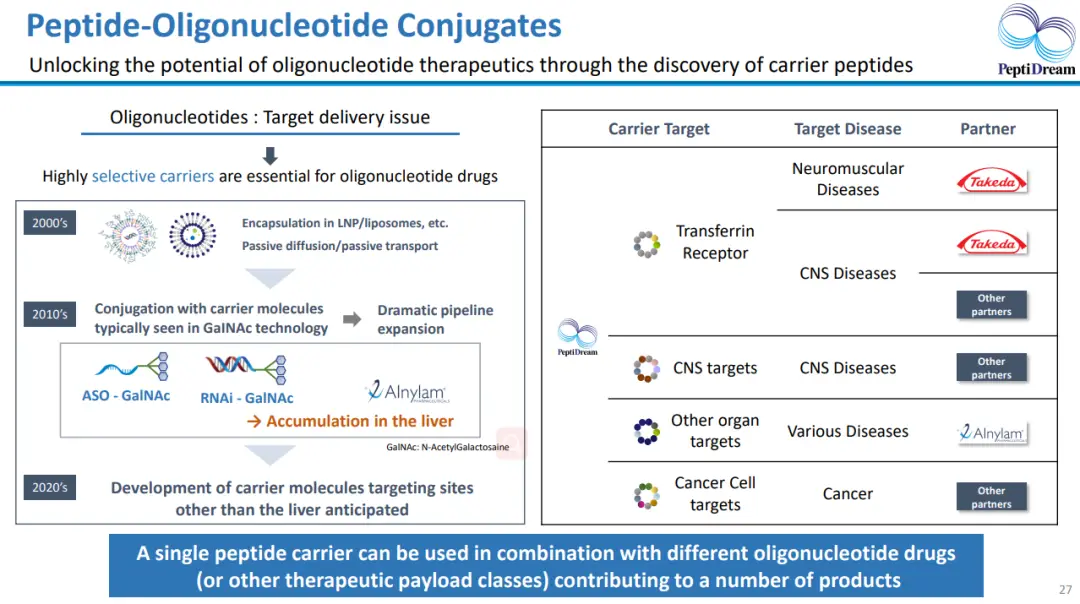
Peptide-conjugated oligonucleotides enhance targeting and delivery efficiency by coupling oligonucleotides with specific peptide segments. For example, peptide-oligonucleotide conjugates (POCs) utilize the specific binding ability of peptides to accurately deliver oligonucleotides to target cells or tissues.
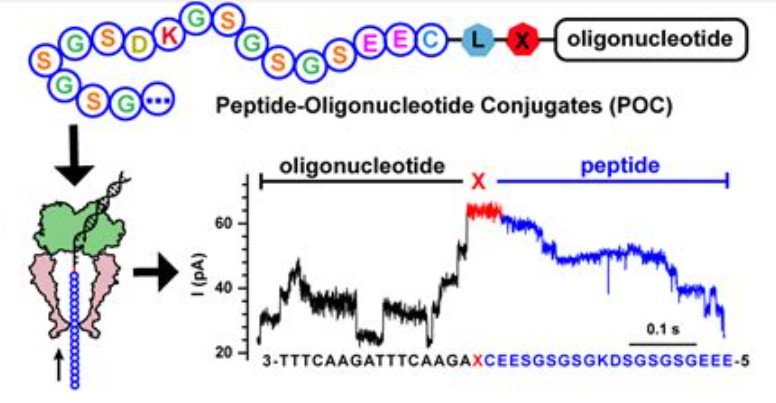
Research indicates that peptide conjugates can significantly improve the cellular uptake rate of oligonucleotides and gene silencing effects. For instance, PMO-PEI conjugates have been used to treat Duchenne muscular dystrophy, showing good splice repair effects. Furthermore, peptide conjugates also demonstrate high biocompatibility and low toxicity during the delivery process.
3. Other Conjugation Methods
In addition to lipid and peptide conjugation, other types of conjugation methods have been studied, such as aptamer-oligonucleotide conjugates and toxin-oligonucleotide conjugates. These conjugates optimize the delivery efficiency and therapeutic effects of oligonucleotides by combining different functional molecules.
3. Future Directions
Despite the significant progress in the research of oligonucleotide conjugates, there are still challenges and future development directions:
Optimizing Delivery Efficiency: Improving the cellular uptake rate and tissue delivery efficiency of oligonucleotides is a current research focus. For example, designing more efficient delivery carriers or introducing new functional molecules to enhance delivery effects.
Increasing Biological Stability: Enhancing the stability of oligonucleotides and their conjugates in vivo and their resistance to enzymatic degradation is a key issue. For instance, introducing protective groups or using new chemical modification methods to enhance stability.
Developing New Conjugation Technologies: Developing more efficient and simpler chemical conjugation methods for large-scale production while ensuring the purity and quality of the conjugates.
Clinical Application Research: Some oligonucleotide conjugates have entered clinical trial stages, but no commercial products have been approved yet. Future clinical studies are needed to further validate their safety and efficacy.
4. Conclusion
The research on oligonucleotide and lipophilic molecule conjugates provides new strategies and tools for gene therapy and disease treatment. By combining lipids, peptides, or other functional molecules, researchers can significantly improve the delivery efficiency and therapeutic effects of oligonucleotides. However, challenges such as low delivery efficiency and poor biological stability still need to be overcome to further promote their clinical application.
ACUBIOCHEM is a leading supplier in the field of oligonucleotide and lipophilic conjugation services, boasting over 10 years of experience. With a fully equipped facility, we not only provide comprehensive conjugation support but also synthesize lipophilic molecules in-house, significantly reducing costs for our clients. In addition to our oligonucleotide and lipophilic conjugation services, ACUBIOCHEM offers a diverse range of linkers and lipophilic molecules to support your research endeavors. We provide free technical consultations to assist you in your projects. Contact us at info@acubiochem.com to embark on your journey to success today.